Boeing · Narrowbody · In Production
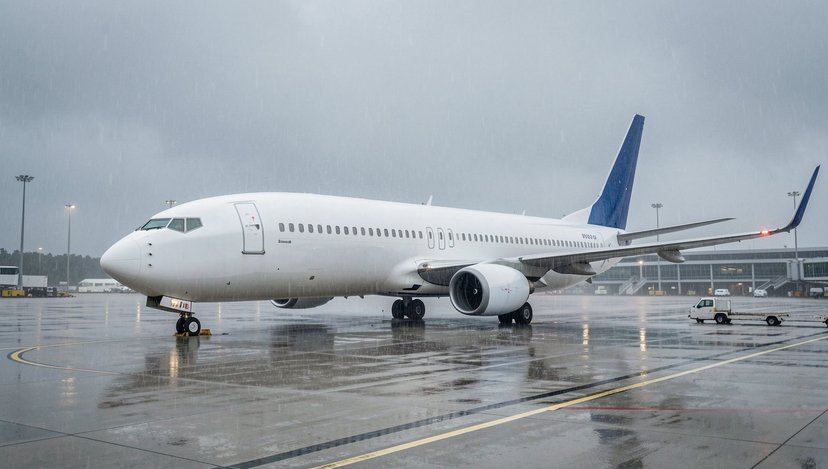
Boeing 737 MAX 8

MarcelX42 — CC BY-SA 4.0
The Boeing 737 MAX 8 is a narrow-body twinjet airliner developed by Boeing as the core variant of its fourth-generation 737 family. Designed to replace the enormously successful 737 Next Generation (NG) series, the MAX 8 incorporates high-bypass CFM International LEAP-1B engines and advanced split-tip winglets to yield substantial fuel burn reductions and lower operational noise footprints.
As the backbone of the MAX lineup, the aircraft occupies the prime market segment for short- to medium-haul route networks, routinely seating between 162 and 178 passengers in a standard two-class configuration. Its commercial trajectory, however, has been profoundly shaped by historic events; following two tragic fatal accidents tied to the Maneuvering Characteristics Augmentation System (MCAS), the global fleet underwent a 20-month grounding starting in March 2019. Comprehensive flight-control software revisions, dual angle-of-attack sensor integrations, and rigorous regulatory recertification cleared the type for a global return to service beginning in late 2020.
By The Numbers
The Boeing 737 MAX program continues to scale output across its Renton assembly lines, backed by thousands of cumulative orders. As of mid-2026, cumulative deliveries for the wider 737 MAX family have surpassed 2,360 airframes out of a massive multi-thousand aircraft order backlog. The 737 MAX 8 remains the backbone variant of this single-aisle family, commanding the lion's share of both historical production lines and active commercial service.
Operationally, the aircraft is heavily concentrated across North America, Europe, and Latin America. Major network operators such as Southwest Airlines, United Airlines, American Airlines, Alaska Airlines, and low-cost giants like Ryanair dominate the active fleet logs, utilizing the MAX 8 and its variants to anchor short- and medium-haul domestic routes. Production output has targeted steady monthly ramps following prior supply chain constraints, with delivery numbers regularly hitting key manufacturing thresholds.
Manufacturing
Where It's Built
Final assembly of the Boeing 737 MAX 8 takes place at Boeing's Renton Factory in Washington state, utilizing a moving assembly line framework. Major structural sections and components are sourced from specialized tier-one global suppliers before final integration.
Key structural and systems suppliers include:
- Fuselage: Spirit AeroSystems (based in Wichita, Kansas) manufactures and delivers complete fuselage structures, which are transported to Renton via rail. Spirit also produces major elements including pylons, engine nacelles, and thrust reversers.
- Wings and Control Surfaces: Wings are assembled internally by Boeing, while specialized subcomponents like wing leading-edge structures are supplied externally by manufacturers such as Spirit AeroSystems from facilities in Tulsa, Oklahoma.
- Avionics and Flight Systems: Integrated flight deck displays, flight management computers, and primary electronic systems are supplied by Rockwell Collins (now RTX Corporation) and Honeywell Aerospace.
Precise, publicly documented total development costs for the 737 MAX program are not officially itemized as a single definitive figure by Boeing, as development expenditures were absorbed into broader sustaining engineering budgets; however, aerospace industry analyses and financial estimates generally place the airframe and re-engining adaptation outlays between $4 billion and $5.5 billion.
Notable Operators
Watch
Boeing 737 MAX 8 In Action
American Airlines 737 MAX 8 | Takeoff and Landing | LGA - MIA
Sunwing airlines new 737 MAX 8
Safety Record
Notable Safety History
The Boeing 737 MAX 8 was subject to a worldwide grounding order in March 2019 following two fatal accidents: Lion Air Flight 610 and Ethiopian Airlines Flight 302. Official investigations conducted by authorities including the Indonesian National Transportation Safety Committee (NTSC), the Ethiopian Civil Aviation Authority (EAAB), and the U.S. Federal Aviation Administration (FAA) determined that both accidents involved the repeated, unintended activation of the Maneuvering Characteristics Augmentation System (MCAS)—a flight control law added to the MAX variant to counteract pitch-up tendencies caused by larger, forward-mounted CFM LEAP-1B engines.
Official investigations and subsequent regulatory reviews identified design vulnerabilities relating to reliance on a single Angle of Attack (AoA) sensor input, inadequate fail-safes, and insufficient clarity regarding system behavior in flight crew training manuals. In response, regulatory authorities mandated extensive engineering and operational modifications before recertification. These requirements, enacted via Airworthiness Directives and design mandates, included:
- Software Re-architecture: Updating the MCAS flight control software to compare inputs from both left and right Angle of Attack (AoA) sensors, limiting stabilizer trim commands to a single cycle per activation event, and capping maximum authority to ensure pilots can manually override the system using control column trim switches.
- Flight Deck Alerting: Mandating the activation of the AoA Disagree alert as a standard, active operational feature across all aircraft configurations.
- Procedural and Training Revisions: Updating the Flight Crew Operations Manual (FCOM) and redefining abnormal checklist procedures to address runaway stabilizer trim conditions comprehensively, accompanied by mandatory simulator training for all flight crews transitioning to the aircraft type.
Covers officially investigated accidents only, per aviation safety authorities (NTSB, FAA, EASA, AAIB or equivalent).
Latest
Boeing 737 MAX 8 in the News

flydubai Holidays Revamps Platform and Packages

Flydubai Targets Full Flight Capacity Reset by Year-End

flydubai Boosts Global Reach With New Air India Deal
flydubai Expands Network Past 125 Destinations
Verona Flight Diverted to Bergamo After Sudden Storm

Neos Expands Arctic Charter Network to Greenland
Sources & Further Reading