Boeing · Widebody · In Service
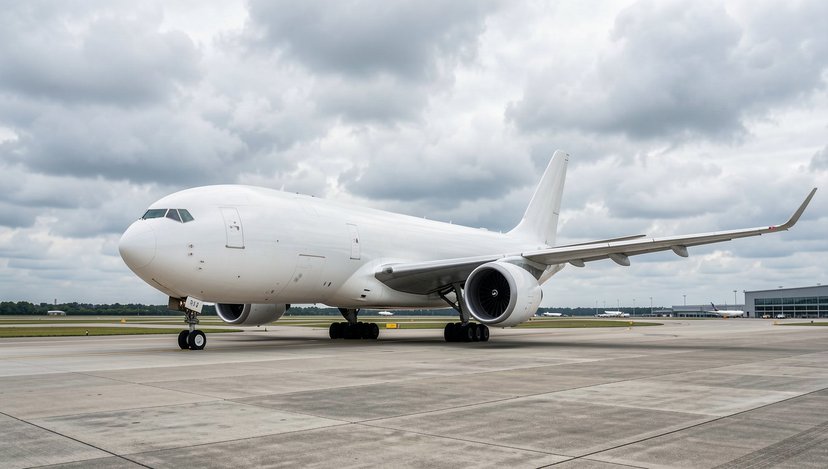
Boeing 767-300

Adrian Pingstone — Public domain
The Boeing 767-300 is a stretched, wide-body twin-engine jet airliner developed by Boeing Commercial Airplanes. Designed as a higher-capacity development of the baseline 767-200, the -300 variant features a fuselage lengthened by 2.11 meters (6.9 feet), significantly expanding passenger and belly-hold cargo capacity while retaining the core aerodynamic profile and two-crew glass cockpit of the original family.
Introduced commercially in October 1986 with Japan Airlines, the aircraft type became a cornerstone of medium- to long-haul international and transcontinental networks. Its popularity surged further with the introduction of the extended-range 767-300ER variant in 1988, which unlocked vital transatlantic and transpacific twin-engine routes under ETOPS regulations, proving pivotal to modern hub-and-spoke scheduling.
Alongside its passenger success, the 767-300 architecture spawned the dedicated 767-300F production freighter and serves as the structural baseline for modern military adaptations like the KC-46 Pegasus tanker. Although passenger production lines have wound down, large fleets continue to form the backbone of major legacy carriers and global express cargo networks.
By The Numbers
The Boeing 767 program has achieved widespread commercial and industrial scale over its more than four decades of continuous manufacturing. Across the entire family line, Boeing has recorded over 1,450 net orders, resulting in more than 1,370 total aircraft delivered. Within this macro tally, the 767-300 series emerged as the undisputed backbone of the program, anchored heavily by the prolific 767-300ER passenger variant and the dedicated 767-300F production freighter.
Today, day-to-day operations for the aircraft type are heavily concentrated among major North American legacy carriers and global logistics giants. Delta Air Lines maintains the world's largest passenger fleet of 767s, deploying them extensively on domestic hubs and transatlantic routes. Meanwhile, massive cargo networks led by FedEx Express and UPS Airlines rely on heavy concentrations of the 767-300 freighter family to power domestic and intercontinental package express routes.
Manufacturing
Where It's Built
Final assembly of the Boeing 767 family, including the 767-300 variants, takes place at Boeing's Everett factory in Washington State. The program relies on a vast global supply chain for major structural sections and components. Primary fuselage panels and structural sub-assemblies are manufactured by domestic and international subcontractors, notably supported by risk-sharing partnerships such as the Civil Transport Development Corporation (CTDC) in Japan and Aeritalia in Italy, which produce major structural elements. Wings feature advanced supercritical aerodynamics with structural boxes, spars, and skin panels sourced from external aerospace suppliers, while high-tech wing trailing-edge actuation components are produced by specialized facilities including Boeing Sheffield in the United Kingdom. Avionics, flight deck displays, and flight management systems are integrated from major systems suppliers like Rockwell Collins and Honeywell. Precise, standalone aggregate development costs for the initial 767 program are not officially itemized in public corporate ledgers as a distinct standalone figure, as development outlays were integrated across broader commercial transport research and risk-sharing consortium accounting during its late-1970s and 1980s launch phase.
Notable Operators
Watch
Boeing 767-300 In Action
EPIC ENGINE ROAR! British Airways 767-300 Takeoff from London Heathrow!
Boeing 767 promotional spot / Presentación del Boeing 767
Safety Record
Notable Safety History
Official investigations into operational incidents and structural maintenance findings have historically driven targeted airworthiness directives for the Boeing 767-300 series. Regulatory oversight by authorities such as the Federal Aviation Administration (FAA) has included mandates addressing specific structural maintenance vulnerabilities, such as the detection of scribe lines at skin lap and butt joints requiring repetitive inspections to prevent skin cracking and fatigue. Additional structural and mechanical integrity directives have addressed localized landing gear maintenance practices and preventions against potential gear support assembly degradation following procedural discrepancies during heavy maintenance. These regulatory actions ensure continued airworthiness across the active commercial and cargo fleet.
Covers officially investigated accidents only, per aviation safety authorities (NTSB, FAA, EASA, AAIB or equivalent).
Latest
Boeing 767-300 in the News
Amazon Cuts Ties With 21 Air After Miami Crash

Flight Recorders Recovered in Miami Boeing 767 Excursion

Amazon Cargo Jet Crash in Miami Leaves Five Dead

Miami Airport Reopens After 21Air Runway Excursion

American Flight Diverts to Philadelphia After Runway Mishap

Delta Catania-New York Flight Makes Unexpected Dublin Stop
Sources & Further Reading
- Wikipedia - Boeing 767 ↗
- Simple Flying - Boeing 767 Variants ↗
- Wikipedia - Boeing 767 ↗
- Simple Flying - How The Boeing 767 Quietly Outlived Every Aircraft Meant To End Its Career ↗
- Wikipedia - Boeing 767 ↗
- Airframer - Boeing 767 Program Supplier Guide ↗
- Federal Register - FAA Airworthiness Directives for Boeing 767 Airplanes ↗