Airline Alliances
Oneworld: The Smallest, Most Selective Global Alliance
_-_Airbus_A350-941_-_143_-_VGHS.jpg?width=1600)
Qatar Airways’ Oneworld-liveried A350 — Doha is the alliance’s dominant Gulf connecting hub. Photo: Md Shaifuzzaman Ayon, CC BY-SA 4.0
Oneworld launched on 1 February 1999 with five founding members — American Airlines, British Airways, Canadian Airlines, Cathay Pacific and Qantas — and one of those five doesn’t exist anymore: Canadian Airlines was acquired by Air Canada in 2000, barely a year after Oneworld launched. That early instability didn’t stop the alliance from growing since, but it has grown far more slowly and selectively than its two rivals — and that restraint is arguably the point.
Small by design, not by failure
Oneworld holds roughly 11.9% of global commercial aviation market share, the smallest of the three major alliances (Star Alliance leads at 17.4%, SkyTeam sits at 13.7%). But market share alone understates its actual reach: the alliance is built around a small number of exceptionally strong, high-quality carriers on nearly every continent rather than a long tail of smaller regional partners. Qatar Airways’ own membership makes the point — it joined in 2013, 14 years after Oneworld launched, evidence the alliance prioritised eventual fit over rapid growth for its own sake.
Coverage
If you fly Oneworld, here’s what you actually reach
North America
American Airlines, Alaska Airlines
American’s multi-hub domestic network plus Alaska’s West Coast strength give broad US coverage, though thinner than Star Alliance’s two-carrier North American bench.
Europe
British Airways, Iberia, Finnair
IAG’s two hubs (Heathrow, Madrid) plus Finnair’s Helsinki gateway into Asia over the Arctic — a compact but genuinely strong European core.
East & Southeast Asia
Cathay Pacific, Japan Airlines, Malaysia Airlines
Hong Kong, Tokyo and Kuala Lumpur between them cover Greater China, Japan and maritime Southeast Asia.
Middle East
Qatar Airways, Royal Jordanian
Doha is the dominant long-haul connecting hub; Qatar Airways alone gives Oneworld a Gulf presence as strong as any single Star or SkyTeam member.
Oceania
Qantas
The alliance’s only Australian/NZ-region member, but a strong one — Qantas covers the region single-handedly rather than sharing it.
Africa
Royal Air Maroc
The thinnest region for Oneworld relative to Star Alliance’s Ethiopian Airlines anchor — Royal Air Maroc covers North/West Africa only.
The arc
25 years, including the parts that didn’t go to plan
- 1 Feb 1999The bet
Oneworld launches
Five founders: American Airlines, British Airways, Canadian Airlines, Cathay Pacific and Qantas.
- 2000Break
Canadian Airlines disappears
Acquired by Air Canada barely a year after helping found Oneworld — one of the five founders ceases to exist before the alliance turns two.
- Sep 1999Proof
Finnair and Iberia join
Early joiners rather than founders, but both have stayed for the alliance’s entire history since.
- 2013Proof
Qatar Airways joins
Fourteen years after launch — evidence the alliance prioritised eventual fit over rapid growth for its own sake.
- 1 May 2020Break
LATAM leaves — for no rival alliance at all
Departs early (originally planned for October) after Delta buys a 20% stake, and does not join SkyTeam or any other alliance — it goes fully unaligned instead. Covered in depth below.
- 2021Reset
Alaska Airlines joins
Adds West Coast US reach on top of American Airlines’ domestic network.
- 2024Proof
25th anniversary, 13 members
The smallest of the three global alliances by design, holding roughly 11.9% of global market share.
Reach
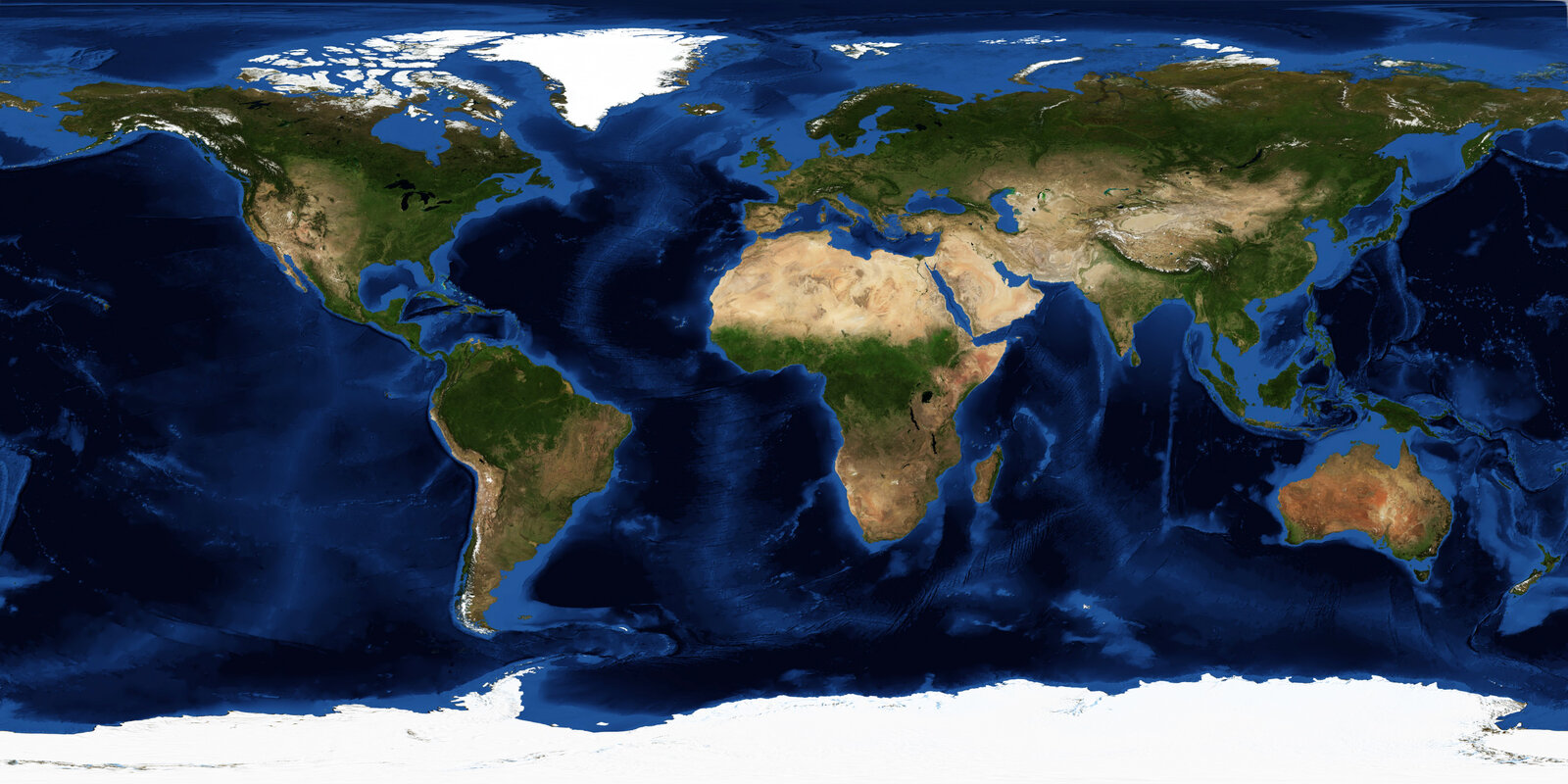
All 13 hub cities, mapped
Every member's primary hub, plotted by real coordinates. The gaps are as informative as the dots — thin in Africa and Latin America compared with Star Alliance's spread.
Figures
Global commercial aviation market share
Source: Industry estimates, 2025
Members
All 13 Oneworld members

Alaska Airlines
Seattle · North America
Joined 2021

American Airlines
Dallas, Charlotte, Miami, more · North America
Founding member, 1999

British Airways
London Heathrow · Europe
Founding member, 1999

Cathay Pacific
Hong Kong · East Asia
Founding member, 1999

Finnair
Helsinki · Nordic Europe
Joined September 1999

Iberia
Madrid-Barajas · Latin America gateway
Joined September 1999

Japan Airlines
Tokyo Haneda · Japan
Joined 2007

Malaysia Airlines
Kuala Lumpur · Southeast Asia
Joined 2013

Qantas
Sydney, Melbourne, Brisbane · Oceania
Founding member, 1999

Qatar Airways
Doha · Middle East
Joined 2013

Royal Air Maroc
Casablanca · North Africa
Joined 2020

Royal Jordanian
Amman · Middle East
Founding member, 1999

SriLankan Airlines
Colombo · South Asia
Joined 2014
Today’s full membership
As of the alliance’s 25th anniversary in 2024, Oneworld counted thirteen member airlines: Alaska Airlines, American Airlines, British Airways, Cathay Pacific, Finnair, Iberia, Japan Airlines, Malaysia Airlines, Qantas, Qatar Airways, Royal Air Maroc, Royal Jordanian and SriLankan Airlines. Finnair and Iberia both joined in September 1999, just months after launch — early members rather than founders, but both have stayed for the alliance’s entire history since.
Alliance membership vs the joint ventures underneath it
Oneworld’s own history makes the case for why alliance membership alone isn’t the whole story. American Airlines and British Airways don’t just share Oneworld membership — they run a genuinely metal-neutral transatlantic joint venture, sharing total itinerary revenue on shared North Atlantic routes regardless of which airline’s aircraft actually flies the passenger, coordinating schedules and pricing far more tightly than Oneworld membership alone requires. Qatar Airways’ relationship with both is looser by comparison — real alliance benefits (codesharing, reciprocal loyalty, lounge access) but not the same revenue-sharing depth. The lesson generalises across all three alliances: membership is the wide net that makes loyalty programmes and lounges interoperable across a dozen-plus airlines; the handful of joint ventures nested inside it are where the deeper commercial commitment actually sits.
The core triangle
Oneworld’s three largest members by combined network reach — American Airlines, British Airways and Qatar Airways — between them cover North America, Europe and the Middle East’s long-haul connecting-hub role so thoroughly that the alliance’s remaining members function largely as regional feed into that core triangle: Cathay Pacific and Japan Airlines feeding Asian traffic toward it, Qantas feeding Australian traffic, Royal Jordanian and Royal Air Maroc feeding Middle Eastern and North African traffic. A hub-of-hubs structure that mirrors, at the alliance level, the same hub-and-spoke logic individual airlines use at the airport level.
When an airline just leaves — and doesn’t join a rival either
Every other alliance departure covered on this site follows the same script: an airline gets acquired, and it switches to whichever alliance its new owner already belongs to (SAS to SkyTeam, Continental to Star, US Airways to Oneworld — all ownership-driven, all landing in another full alliance). LATAM Airlines broke that script entirely. American Airlines and LATAM had spent years trying to build a joint venture across the Americas, but it kept stalling on regulatory approval, particularly in Chile. Delta saw the opening: in 2019 it agreed to buy a 20% equity stake in LATAM and take over some of LATAM’s Airbus A350 order, investing $1.9 billion for the position American couldn’t regulatorily secure. LATAM confirmed it would leave Oneworld — then moved the exit forward from its planned October 2020 date to 1 May 2020. The genuinely unusual part: LATAM did not join SkyTeam, even though its new part-owner Delta is a SkyTeam anchor. It chose to stay unaligned, running its Delta partnership as a standalone bilateral deal instead. Delta itself has been quietly de-emphasising broad alliance membership in favour of exactly this kind of narrower, deeper bilateral partnership for years — LATAM’s exit is the clearest evidence yet that a major airline can now walk away from the three-alliance system altogether and still be commercially fine.