Airline Alliances
SkyTeam: The Alliance Built on Two Holding Companies
.jpg?width=1600)
An Air France A321 in full SkyTeam livery — Air France-KLM Group is one of two holding companies whose own acquisitions have driven most of SkyTeam’s recent growth. Photo: Alan Wilson, CC BY-SA 2.0
SkyTeam launched on 22 June 2000, the youngest of the three global alliances, founded by Air France, Delta Air Lines, Aeromexico and Korean Air. Twenty-five years later it has grown into 18 member airlines connecting more than 945 destinations across 145 countries — and unusually among the three alliances, a meaningful share of that growth has come not from airlines independently choosing to join, but from SkyTeam’s own founding members buying other airlines outright and bringing them along.
Grown by acquisition, not just recruitment
Air France and Delta are both themselves anchors of larger holding-company structures — Air France-KLM Group and (through its own separate equity stakes) a wider Delta-led transatlantic partnership — and when those groups acquire an airline, SkyTeam membership has tended to follow. The clearest recent example: when Air France-KLM Group bought Scandinavian Airlines (SAS) at the start of 2024, SAS left Star Alliance, where it had been a member for decades, and joined SkyTeam instead, simply because its new parent company was a SkyTeam anchor.
Coverage
If you fly SkyTeam, here’s what you actually reach
Europe
Air France, KLM, SAS, Air Europa
Paris and Amsterdam anchor the core; SAS’s 2024 arrival (following Air France-KLM’s acquisition) adds genuine Nordic reach Star Alliance previously held via the same airline.
North America
Delta Air Lines, Aeromexico
Delta’s huge domestic US network plus Aeromexico’s Mexican reach — a strong but two-carrier-dependent region compared with Star’s United+Air Canada pairing.
East & Southeast Asia
Korean Air, China Eastern, China Airlines, Vietnam Airlines, Xiamen Air, Garuda Indonesia
SkyTeam’s deepest regional bench by member count — genuinely comprehensive coverage across Korea, China, Vietnam, Indonesia and Taiwan.
Middle East
Middle East Airlines, Saudia
Beirut and the Saudi network give SkyTeam a real but comparatively modest Middle East presence next to Qatar Airways’ single-handed Oneworld dominance there.
Latin America
Aeromexico, Aerolíneas Argentinas
Mexico City and Buenos Aires anchor a genuine, if geographically split, Latin American network.
UK
Virgin Atlantic
Joined 2023, SkyTeam’s only UK member — sits on top of Delta’s 49% and Air France-KLM’s 31% equity stakes and a joint transatlantic venture with both.
The arc
25 years, including a founding member walking out
- 22 Jun 2000The bet
SkyTeam launches
Four founders: Air France, Aeromexico, Delta Air Lines and Korean Air.
- 2004Proof
KLM joins
Follows the Air France-KLM merger, the group’s founding member effectively doubling its own alliance footprint.
- Nov 2018 – 31 Dec 2019Break
China Southern announces, then completes, its exit
One of the alliance’s largest members by fleet size leaves entirely — covered honestly below, not glossed over.
- 2 Mar 2023Proof
Virgin Atlantic joins
Formalises, at alliance level, a relationship Delta and Air France-KLM already held through direct equity stakes.
- Jan 2024Proof
SAS joins
Arrives within weeks of Air France-KLM Group completing its acquisition of the Scandinavian carrier.
- 2025Proof
25th anniversary, 18 members
Roughly 13.7% of global market share — ahead of Oneworld, behind Star Alliance, and still growing largely through its own members’ acquisitions.
Reach
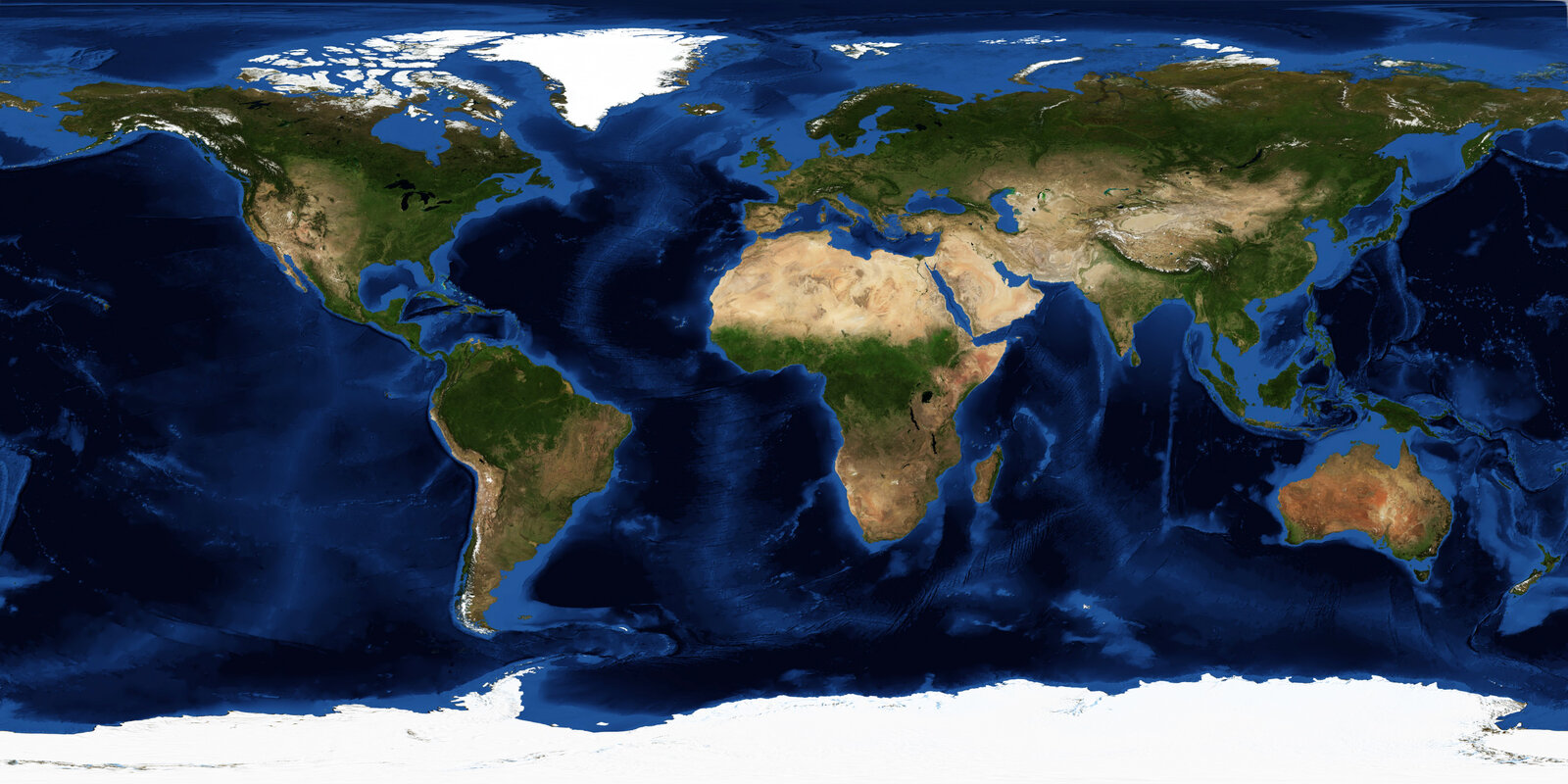
All 18 hub cities, mapped
Every member's primary hub, plotted by real coordinates — SkyTeam's real strength is visibly East/Southeast Asia and Europe, not evenly spread.
Figures
Global commercial aviation market share
Source: Industry estimates, 2025
Members
All 18 SkyTeam members
Aerolíneas Argentinas
Buenos Aires · South America
Joined 2012

Aeromexico
Mexico City · Latin America
Founding member, 2000

Air Europa
Madrid · Europe
Joined 2007

Air France
Paris Charles de Gaulle · Europe
Founding member, 2000

China Airlines
Taipei · Taiwan
Joined 2011

China Eastern
Shanghai · China
Joined 2011

Delta Air Lines
Atlanta, Detroit, more · North America
Founding member, 2000

Garuda Indonesia
Jakarta · Southeast Asia
Joined 2014

Kenya Airways
Nairobi · East Africa
Joined 2007
KLM
Amsterdam Schiphol · Europe
Joined 2004

Korean Air
Seoul Incheon · Northeast Asia
Founding member, 2000

Middle East Airlines
Beirut · Middle East
Joined 2012

Scandinavian Airlines
Copenhagen, Stockholm, Oslo · Nordic Europe
Joined 2024, after Air France-KLM acquisition
Saudia
Jeddah · Middle East
Joined 2012
TAROM
Bucharest · Southeast Europe
Joined 2010

Vietnam Airlines
Hanoi, Ho Chi Minh City · Southeast Asia
Joined 2010

Virgin Atlantic
London Heathrow · Europe
Joined 2023

Xiamen Airlines
Xiamen · China
Joined 2012
The Delta-Virgin Atlantic-Air France-KLM triangle
Virgin Atlantic officially joined SkyTeam on 2 March 2023, becoming the alliance’s only UK member airline — a membership that sits on top of an already tight commercial relationship: Delta holds a 49% equity stake in Virgin Atlantic (bought from Singapore Airlines in 2013), Air France-KLM Group holds a 31% stake (bought from Virgin Group in 2022), and all three airlines jointly operate a transatlantic revenue-sharing joint venture on shared routes. SkyTeam membership formalised, at the alliance level, a relationship that already existed at the ownership level.
Does SkyTeam membership still matter to Delta?
Here’s the uncomfortable question worth asking directly: does broad alliance membership still drive Delta’s actual strategy, or has it been quietly superseded? The industry’s own internal logic has shifted over the past decade from codeshare agreements (an airline sells seats on a partner’s flight, nothing more) toward metal-neutral joint ventures, where two airlines share total itinerary revenue on a route regardless of which one actually operates the flight — a much deeper commercial integration than alliance membership alone provides. Delta’s own pattern makes the point: it holds direct equity stakes in Air France-KLM, Virgin Atlantic, Aeromexico and Korean Air — all four also happen to be SkyTeam members, but the equity stake and joint-venture revenue-sharing arrangement is doing the real commercial work, not the alliance badge. A SkyTeam member Delta has no equity or JV relationship with gets meaningfully less strategic attention than one it does — alliance membership increasingly functions as the baseline layer beneath a smaller set of much tighter bilateral partnerships, not as the primary strategy in itself.
When one of your own founders walks out — China Southern, 2019
SkyTeam’s growth story isn’t one-directional, and the clearest counter-example is one of its own biggest members. China Southern Airlines — not a founder, but a member since the alliance’s earlier growth phase and, by fleet size, one of the largest airlines in the world — announced in November 2018 that it would leave SkyTeam entirely, formally exiting on 31 December 2019. The mechanics behind it trace back to the same ownership dynamics covered throughout this site: Delta had taken a stake in fellow SkyTeam member China Eastern in 2015, and China Eastern subsequently deepened its partnership with Air France-KLM, leaving China Southern feeling sidelined within the very alliance it had helped grow. American Airlines then finalised a $200 million investment in China Southern around the same period, giving the carrier a real alternative anchor outside SkyTeam entirely. China Southern also concluded, reasonably, that continued alliance membership was expensive relative to what it was getting back, and that its own ambition to become the world’s largest airline by fleet size would be better served by independent partnerships than by alliance-mandated cooperation with rivals it was also competing against for Chinese domestic and international traffic. It has operated outside all three global alliances ever since, running its own web of bilateral deals — including with American Airlines — instead.
Market position
SkyTeam holds roughly 13.7% of global commercial aviation market share — behind Star Alliance’s 17.4% but ahead of Oneworld’s 11.9%. Its growth trajectory since 2023 (Virgin Atlantic) and 2024 (SAS) suggests that lead over Oneworld is widening, driven substantially by the alliance-following-ownership pattern rather than purely organic recruitment of independent airlines — even after losing a member as large as China Southern along the way.