How Flying Works
Why Commercial Flights Don’t Cross Antarctica
Airlines routinely fly near-polar routes over the Arctic — it’s a normal part of how flights between North America, Europe and Asia find their fastest path. Flights between the southern continents don’t do the equivalent over Antarctica, even on routes where a more direct path would cross close to it. The reason isn’t that Antarctica is somehow more dangerous to fly over in the air. It’s that there’s almost nowhere to land if something goes wrong.
The rule that actually governs this: ETOPS
Most long-haul airliners today are twin-engine jets, and twin-engine jets flying long routes operate under ETOPS certification: a requirement that the aircraft stay, at every point of the flight, within a certified maximum flying time of an airport capable of handling an emergency diversion. Modern ETOPS ratings are generous — up to 180 minutes or more for many common widebody types — but they still require a real, usable airport within that range, one with a long enough runway, the right emergency services, and the capacity to handle a widebody full of passengers arriving unexpectedly.
The Arctic has a reasonable scatter of these: airports across Alaska, Canada, Greenland, Iceland and Russia sit within ETOPS range of most trans-Arctic routings, which is exactly why airlines can route flights that way at all. Antarctica doesn’t. The nearest airport capable of handling a genuine widebody diversion is in Ushuaia, at the southern tip of Argentina, which can be thousands of kilometres from a flight path crossing the continent’s interior — well beyond what even the most generous ETOPS rating permits.
Try it
Sydney–Santiago: a route that runs close to Antarctica without crossing it
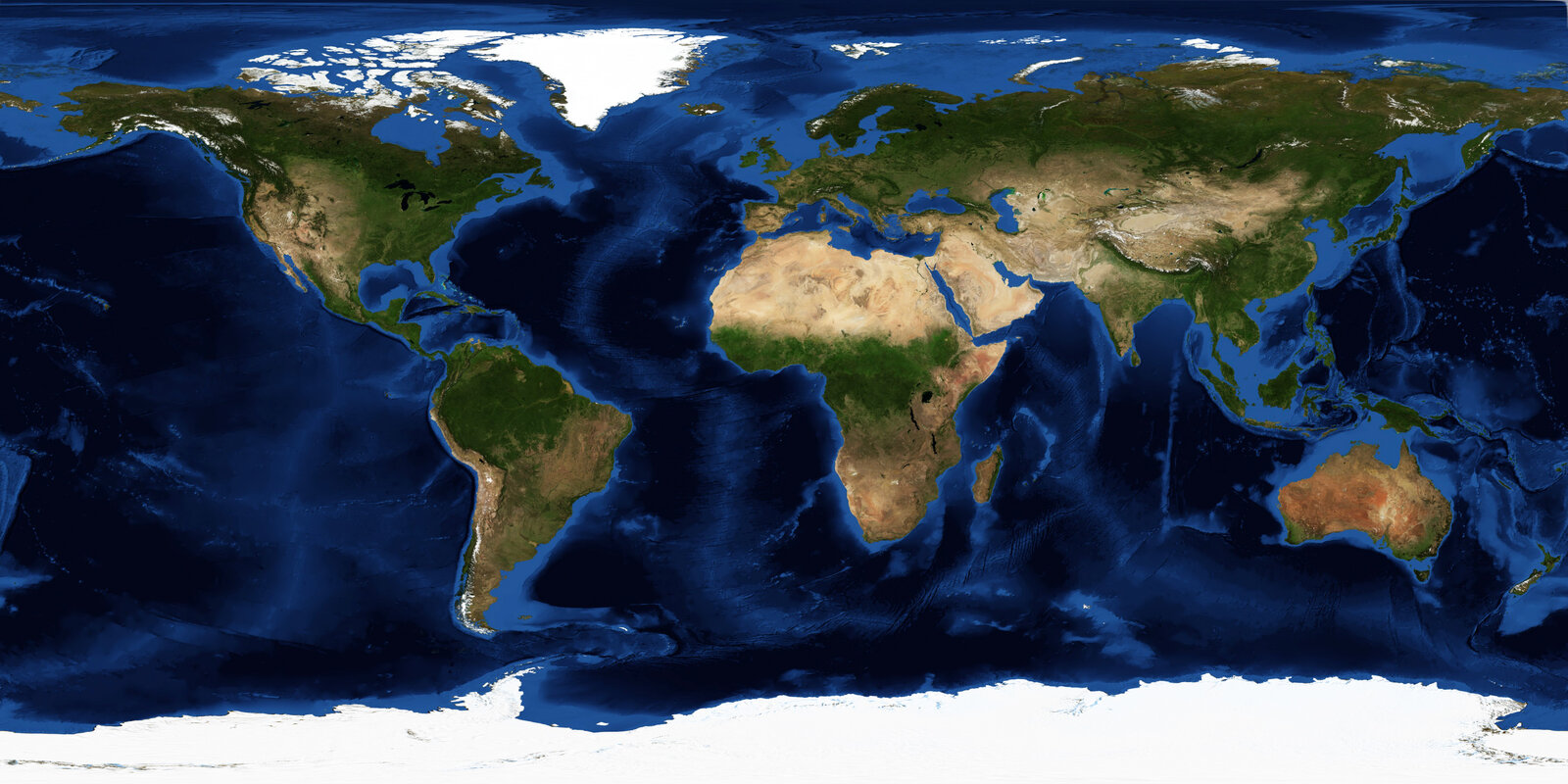
The great-circle shortest path between Sydney and Santiago swings south toward Antarctic latitudes — real routes sometimes brush the edge of this airspace depending on winds, but scheduled flights don't route directly across the interior, where no usable diversion airport exists. The direct great-circle route SYD–SCL is 11,341 km.
A disaster that reinforced the caution
The industry’s wariness about Antarctic flying isn’t purely theoretical. On 28 November 1979, Air New Zealand Flight 901, a sightseeing charter carrying 257 people on a scenic flight over the continent, crashed into the side of Mount Erebus in poor visibility, killing everyone aboard. It remains the deadliest disaster in New Zealand’s history. The crash is often raised alongside the ETOPS and diversion-airport constraints when people ask why Antarctic flying stays so limited, though the structural problem — nowhere safe to divert to — would make scheduled routes over the interior impractical regardless of that history.
It’s a practical limit, not a legal ban
There’s no single aviation authority that polices Antarctic airspace the way national regulators control their own territory, and nothing in international law specifically forbids flying over the continent. Research flights, military transports and specialist tour operators (including scenic flights marketed by airlines such as Qantas) do fly there. What keeps ordinary scheduled passenger routes away is purely operational: the certification rules that already govern every long-haul twin-engine flight simply can’t be satisfied over most of the interior, so no airline plans a route that would require it.
The real numbers
The diversion-airport problem
180+ min
Typical modern ETOPS rating
Maximum time from a diversion airport, for common widebody types
~4,000 km
Ushuaia to the South Pole
The nearest airport capable of a widebody diversion
1979
Mount Erebus disaster
Air New Zealand Flight 901, 257 killed — a sightseeing flight, not a scheduled route
Sources & Further Reading
Common Questions
Frequently Asked Questions
Do any commercial flights cross Antarctica?
Scheduled passenger routes effectively don’t cross the interior. A few southern hemisphere routes, such as between Australia, South Africa and South America, sometimes clip the edge of Antarctic airspace depending on winds, and specialist tour operators fly sightseeing flights over the continent, but no scheduled airline route is planned to fly directly across it the way polar routes cross the Arctic.
Why is the Arctic different from Antarctica for flight routes?
The Arctic has a scatter of usable diversion airports — in Alaska, Canada, Greenland, Iceland and Russia — within range of a twin-engine jet’s ETOPS limits. Antarctica has essentially none that could handle a diverted widebody jet with injured or ill passengers and full emergency services.
What is ETOPS and why does it matter here?
ETOPS (extended-range twin-engine operations) rules require a twin-engine airliner to stay within a certified flying time of a suitable diversion airport at all times. Over Antarctica, the nearest airport capable of handling a widebody diversion, in Ushuaia, Argentina, can be thousands of kilometres away — further than even the most generous ETOPS rating allows for from the continent’s interior.
Did a plane crash in Antarctica affect this?
Yes, partly. Air New Zealand Flight 901, a sightseeing flight, crashed into Mount Erebus in 1979, killing all 257 people aboard. The disaster is frequently cited alongside the operational diversion-airport problem as a reason the industry treats Antarctic overflight with particular caution, though the ETOPS and diversion-airport constraints would apply regardless.
Last reviewed: October 2026. Facts that change, such as fleets, airspace and airline ownership, are re-checked on a schedule. Spotted an error? Email skyplusemail@gmail.com and we’ll fix it. See how we check facts.