Bombardier · Regional Jet · In Service
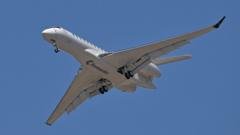
Bombardier CRJ900

formulanone — CC BY-SA 2.0
The Bombardier CRJ900 is a twin-engine regional jet airliner developed by Bombardier Aerospace as a stretched, higher-capacity derivative of the CRJ700. Accommodating typically between 76 and 90 passengers in a single or dual-class layout, it bridges the gap between smaller regional aircraft and mainline narrow-bodies, offering airlines strong operational economics on high-frequency, medium-density domestic and international routes.
Powered by two General Electric CF34-8C5 turbofan engines, the CRJ900 incorporates aerodynamic enhancements over its predecessors, including redesigned winglets and optimized leading-edge slats to improve field performance and fuel efficiency. It entered commercial service with Mesa Airlines in early 2003 and went on to become a staple fleet component for major network carrier regional partners across North America and Europe.
By The Numbers
The Bombardier CRJ900 completed its production run following a total of 487 firm orders placed over the life of the program. As the most popular variant within the later-generation CRJ family, it was manufactured at Bombardier's facilities in Canada until final assembly lines wrapped up, culminating with the delivery of the last CRJ aircraft to SkyWest Airlines in early 2021.
Today, the regional jet is operated most heavily in North America, serving as a cornerstone for major regional carriers flying under mainline partnership brands like Delta Connection, American Eagle, and United Express. Major operators such as SkyWest Airlines, Mesa Airlines, and PSA Airlines have historically relied on the type to handle high-frequency, short-to-medium-haul domestic routes.
Manufacturing
Where It's Built
The Bombardier CRJ900 regional jet was manufactured at Bombardier Aerospace's production facility located in Mirabel, Quebec, Canada. Final assembly operations for the aircraft took place at this site until the production run concluded.
Structural sections and major systems were sourced from a global network of aerospace suppliers. Fuselage sub-assemblies and major structural components were largely integrated in Canada, while wings and specific aerodynamic enhancements—such as specialized winglets introduced in subsequent performance upgrades—were developed to optimize low-speed handling and cruise efficiency. Avionics suites and flight deck instrumentation were supplied primarily by Rockwell Collins, providing a common digital architecture shared across the CRJ family.
The specific standalone development cost allocated directly to stretching the CRJ700 airframe into the 76-to-90-seat CRJ900 program was publicly documented at approximately USD $136 million, building upon the foundational engineering investments already committed to the preceding CRJ700 platform.
Notable Operators
Watch
Bombardier CRJ900 In Action
Air Canada Express Bombardier CRJ-900 Onboard Takeoff
INSANE TRIP REPORT | American Eagle opb PSA | Bombardier CRJ-900 | DFW to Daytona Beach | Main Cabin
Latest
Bombardier CRJ900 in the News

Sources & Further Reading
- Wikipedia - Bombardier CRJ700 series ↗
- Airport Technology - Bombardier CRJ900 ↗
- Wikipedia - Bombardier CRJ ↗
- Simple Flying - The Bombardier CRJ900: A Brief History ↗
- Airport Technology - Bombardier CRJ900 ↗
- The Bombardier CRJ900 explained for regional operations ↗
- Wikipedia - Bombardier CRJ ↗
- Forecast International - Bombardier CRJ Regional Jets ↗