
Explore · country guide
Uzbekistan
Photo: Bobyrr — CC BY-SA 4.0
- City guides
- 4
- Trip-planning topics
- 1
A sharp scent of cumin and woodsmoke drifts through the dense morning crowds at Chorsu Bazaar in Tashkent, where mountains of golden raisins, dried apricots, and dark round loaves of nan bread stack high under a giant turquoise dome. Stepping off the plane feels less like entering a standard modern capital and more like walking onto a living Silk Road stage set, framed by the stark, rust-colored ridges of the Kyzylkum Desert and the distant, snow-dusted peaks of the Tian Shan range.
What sets Uzbekistan apart is the monumental scale of its medieval architecture, which rises abruptly from bustling urban centers and quiet dusty towns alike. In Samarkand, the vast public expanse of Registan Square is anchored by three colossal madrasas—Ulugh Beg, Sher-Dor, and Tilya-Kori—whose soaring tile-clad portals glow in shades of cobalt and azure under a relentless Central Asian sun. Beyond the architecture, daily life pulses through neighborhood teahouses called chaykhanas, where elders sip green tea from handleless porcelain bowls called pialas while slow-simmering iron cauldrons prepare mass batches of plov, the national rice dish layered with chunks of lamb, yellow carrots, and whole cloves of garlic.
For a first-time visitor, moving through the country is a sensory jolt that alternates between the quiet, carpet-lined lanes of ancient inner cities and the metallic hum of high-speed rail lines slicing across flat steppe. Festivals like the Sharq Taronalari music celebration in Samarkand fill ancient courtyards with the reedy wres of traditional instruments like the surnay and the plucked notes of the dutar. Whether you are bargaining for hand-embroidered suzani wall hangings in the open-air courtyards of Bukhara or listening to the call to prayer echo off the tiled minarets of Khiva, arrival here demands an openness to scale, heat, and deeply rooted hospitality.
When to go
The ideal windows for exploring Uzbekistan are the shoulder seasons of spring (April to May) and autumn (September to November). During these months, daytime temperatures hover comfortably between 20°C and 28°C, making it pleasant to walk the sun-baked brick paths of Silk Road monuments without the scorching intensity of summer. Spring brings brief desert blooms and the festive atmosphere around Navruz, the Zoroastrian New Year celebrated with public street fairs and communal cooking of sumalak in late March. Autumn coincides with the grape and melon harvest, flooding local markets with sweet produce. Winters (December to February) can be cold and biting with occasional snow, though cities see far fewer tourists, while summers (June to August) frequently push past 40°C, baking the central deserts and turning sightseeing into an early-morning-only pursuit.
Sources
City guides
Uzbekistan destination guides
4 in-depth guides with things to do, food, where to stay and how to get around.

Ichan Kala, Uzbekistan
Step back into a living Silk Road museum inside the ancient mud-brick fortress walls of Ichan Kala. Explore pristine turquoise minarets, khans' palaces, and timeless desert architecture.
Best · Spring (April to May) and autumn (September to November) offer the most pleasant weather for exploring the open-air streets on foot, avoiding the brutal summer desert heat. Avoid mid-summer (July and August) when temperatures frequently soar past 40°C (104°F) and make daytime walking exhausting
Open guide →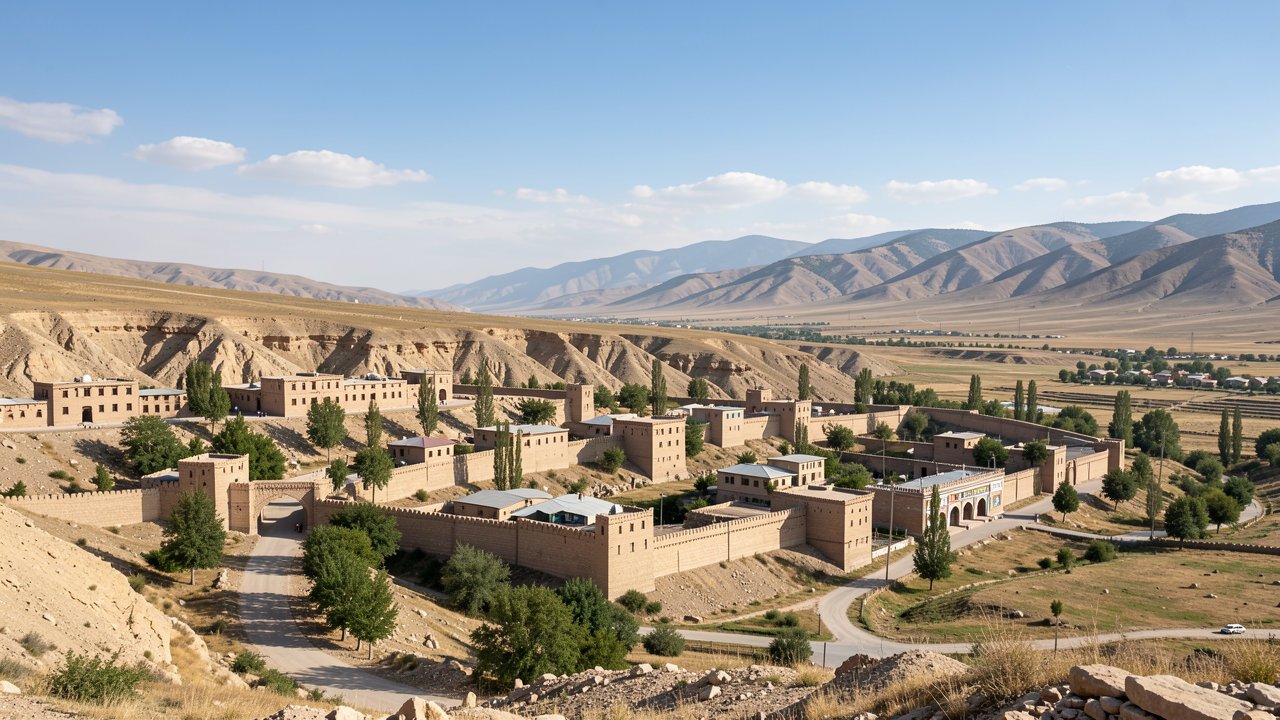
Rishtan, Uzbekistan
Explore Rishtan, Uzbekistan's legendary capital of blue ceramics, ancient red clay traditions, and vibrant Fergana Valley culture.
Best · Spring (April to May) and autumn (September to October) offer the most pleasant weather for exploring outdoor workshops and walking between sights. Avoid mid-summer (July and August) when temperatures in the Fergana Valley frequently soar past 40°C (104°F)
Open guide →
Bukhara, Uzbekistan
Step into the heart of the Silk Road with this comprehensive guide to Bukhara, Uzbekistan, featuring ancient fortresses and timeless architecture.
Best · Spring (April to May) and autumn (September to November) offer the most pleasant daytime temperatures for exploring on foot. Avoid July and August, when desert heatwaves routinely push temperatures above 40°C (104°F)
Open guide →
Khiva, Uzbekistan
Step into Itchan Kala, a preserved fortress of mudbrick minarets and turquoise tiles. Here is everything you need to navigate Khiva like a seasoned traveler.
Best · The optimal windows to visit Khiva are spring (mid-April to late May) and autumn (September to late October), when daytime temperatures hover around a pleasant 20°C to 26°C. Avoid July and August, when scorching desert heat frequently surpasses 42°C (108°F), rendering midday outdoor sightseeing unbearable. Winter (December to February) brings freezing temperatures and biting steppe winds, though the citadel is beautifully desolate and hotel rates drop significantly
Open guide →